In depthEverything about labradorite
What makes labradorite flash, where it comes from, spectrolite and rainbow moonstone, the northern lights legend, what it has traditionally been used for, and how to look after it. Written by the team at our crystal shops in Derby and Leicester.
MineralPlagioclase feldspar
The flashLabradorescence
Hardness6 to 6.5 out of 10
Found inMadagascar, Canada, Finland
ChakraThird eye · Throat
ZodiacSagittarius · Capricorn · Aquarius · Pisces
WaterA quick rinse only
SunlightWon’t fade
What labradorite is
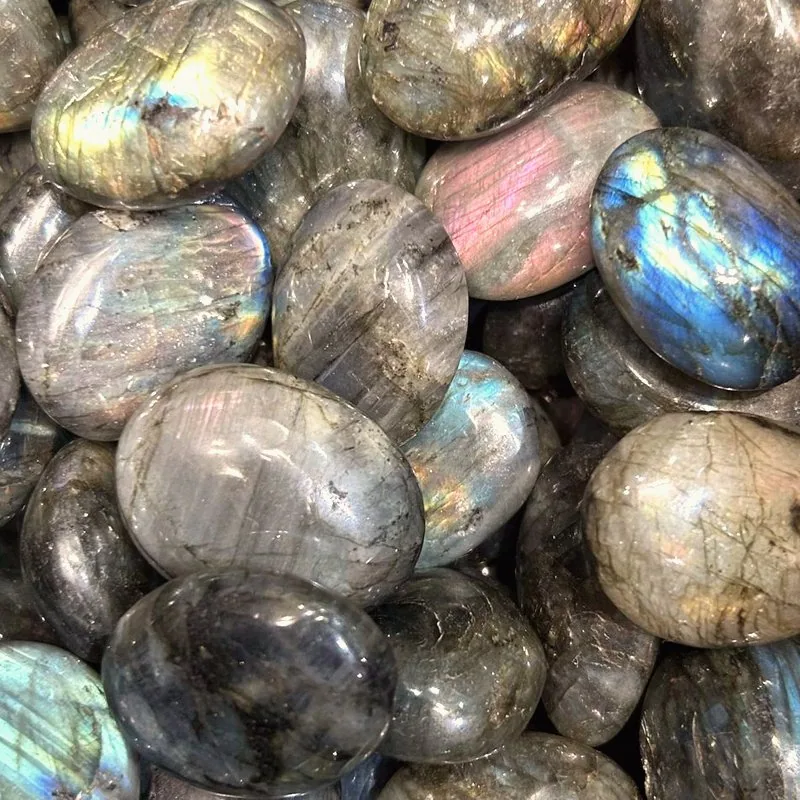
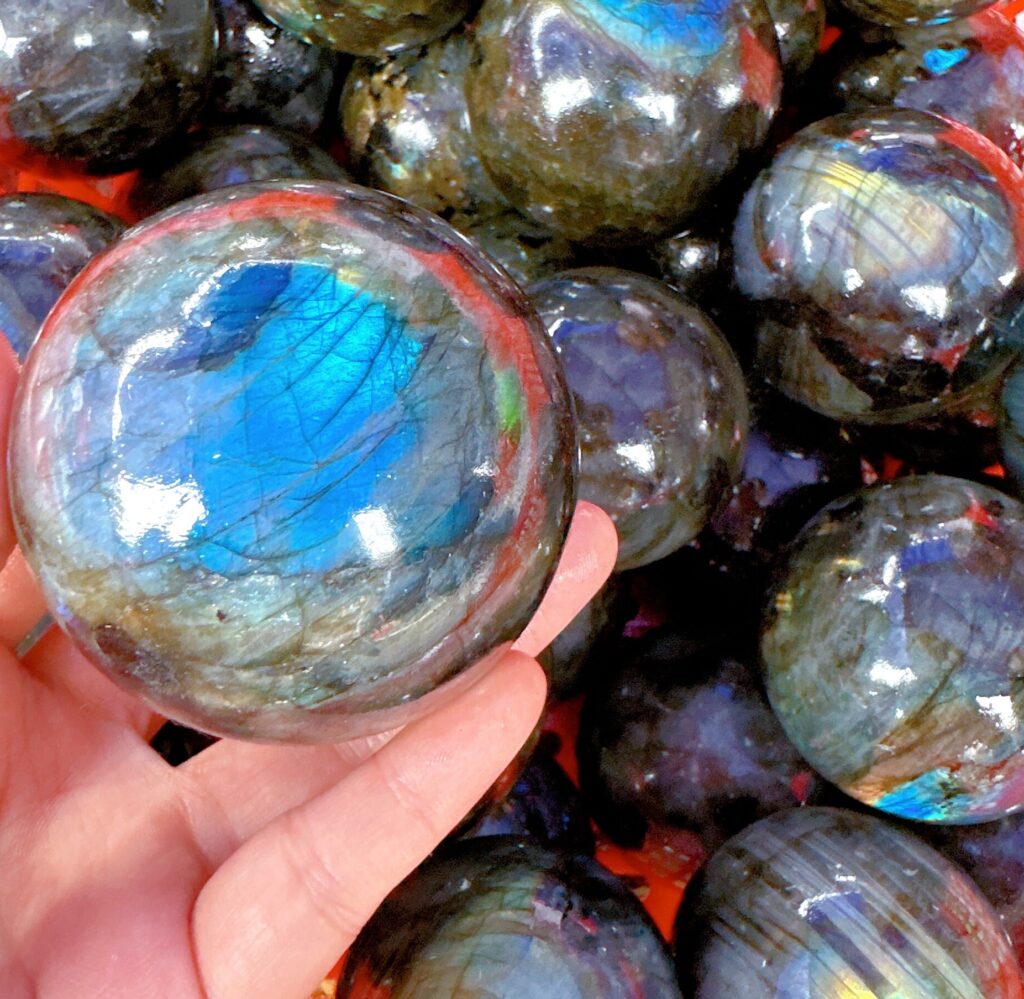
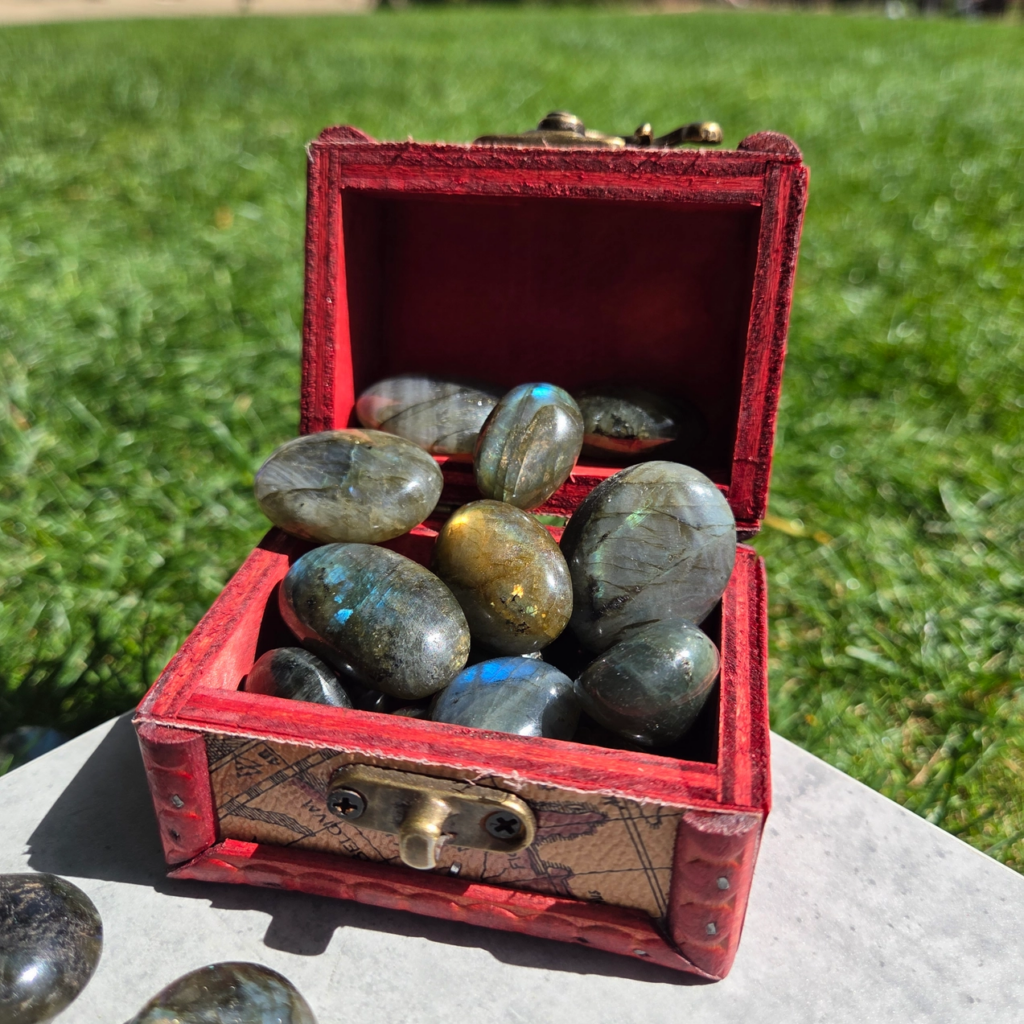
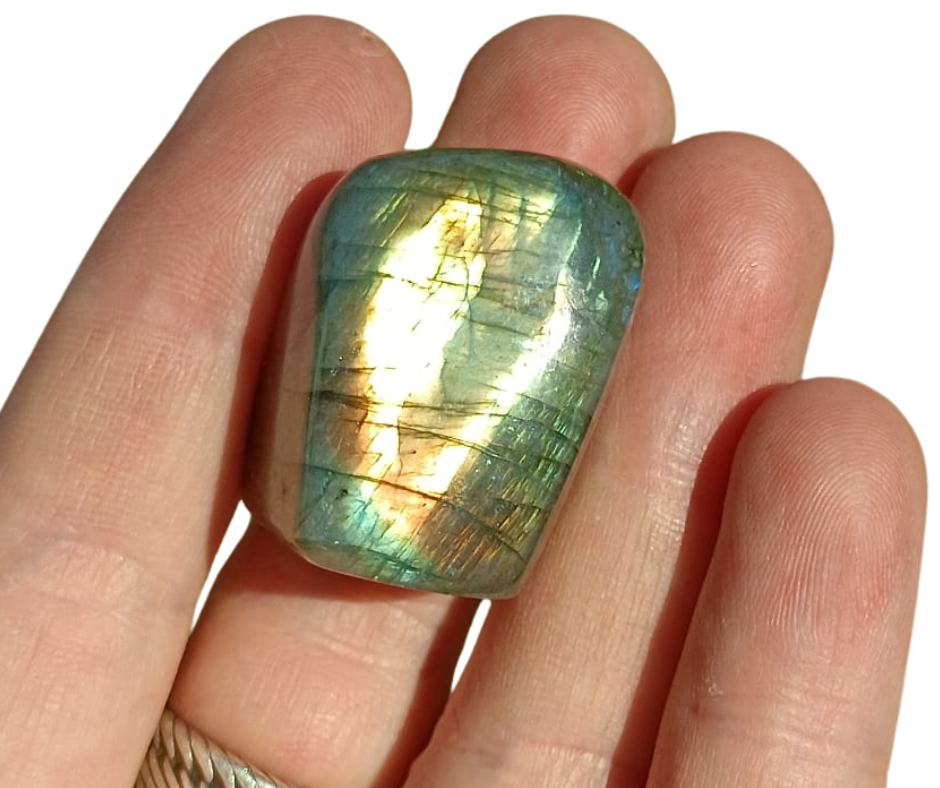
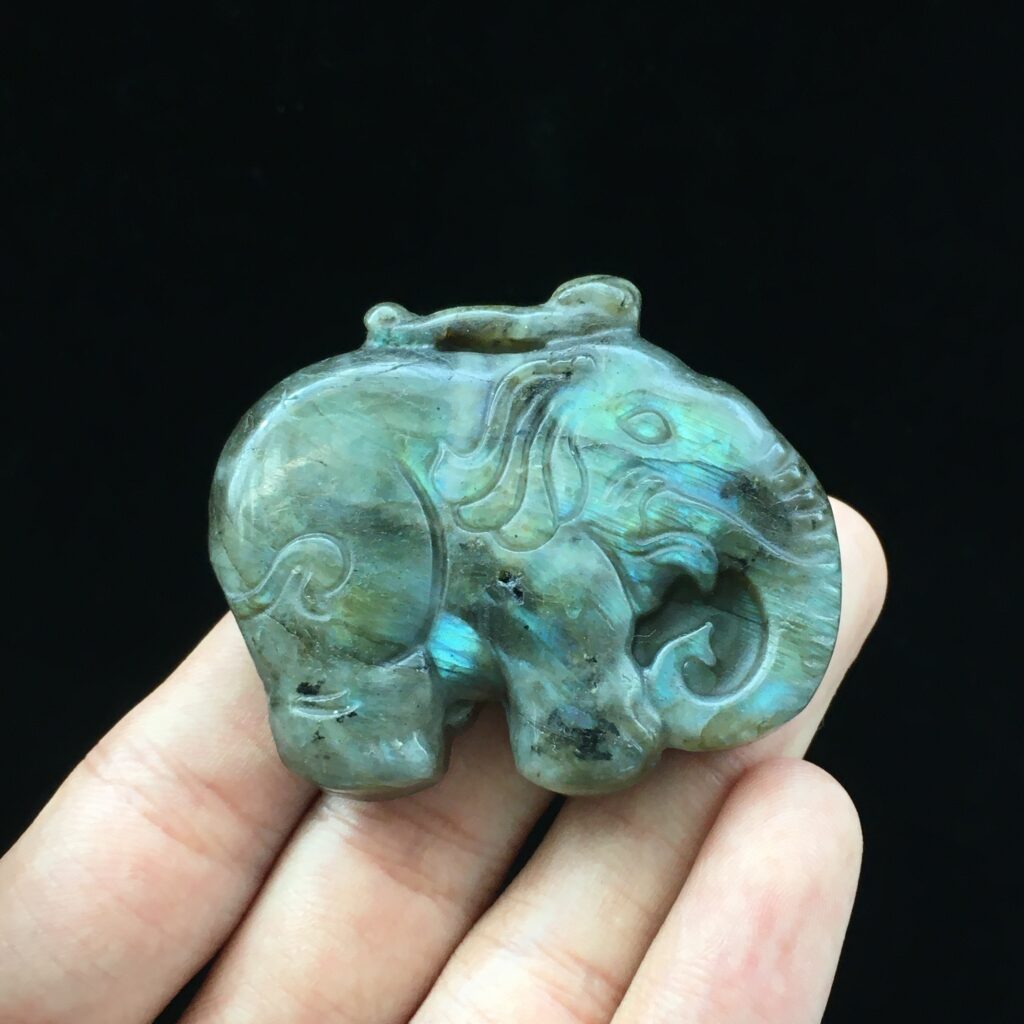
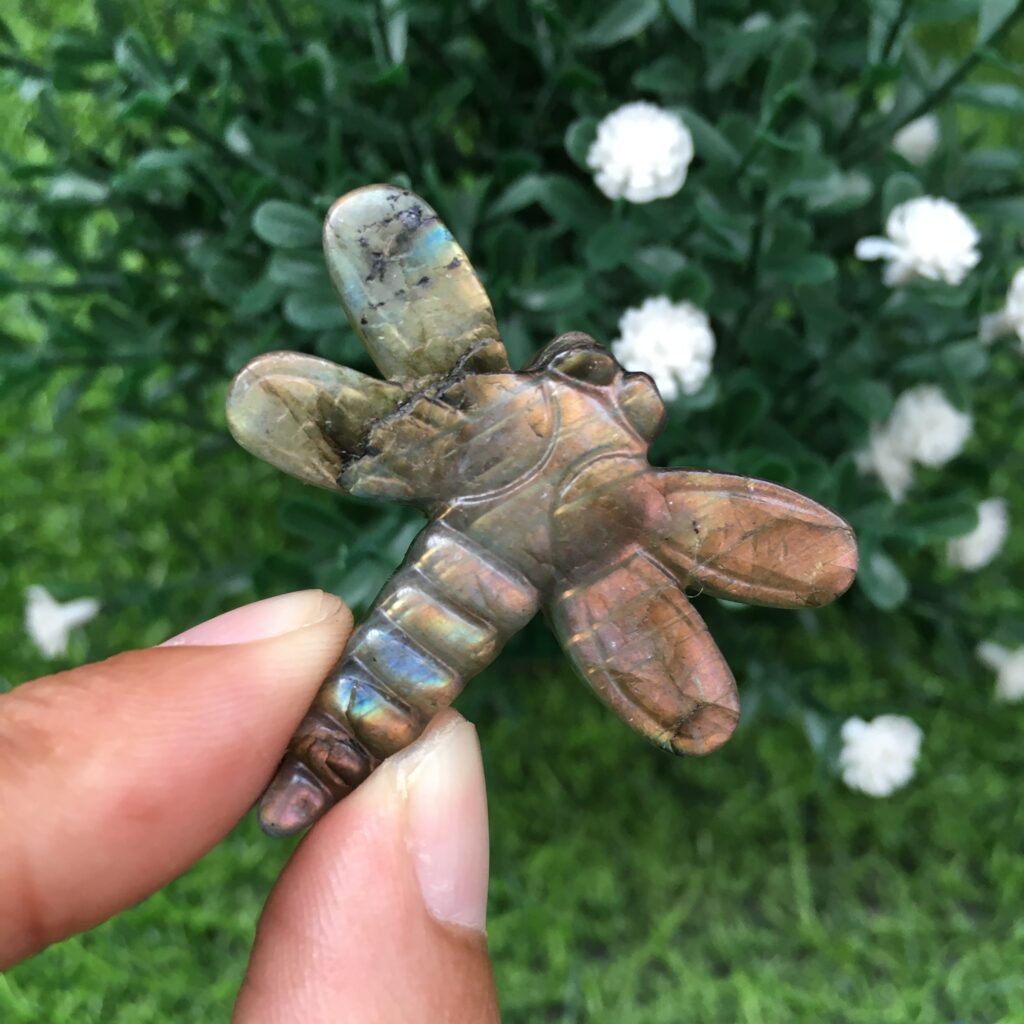
Labradorite is a feldspar, usually a dark grey stone, that suddenly flashes with electric blue, green, gold, orange or even purple when you turn it in the light. That flash is called labradorescence. It happens because the stone is made of extremely thin layers that bounce light back and forth, the same way a soap bubble or a butterfly’s wing makes colour.
Every piece has a "best angle" where the flash is strongest, and two pieces cut from the same rock can flash completely different colours.
Where labradorite comes from
- Canada: named after Labrador, where Europeans described it in the 1770s. Inuit stories knew it long before.
- Madagascar: today most labradorite comes from here, including the bright blue and gold pieces we see most.
- Finland: spectrolite, the most colourful labradorite of all, with flashes across the whole rainbow on a black background.
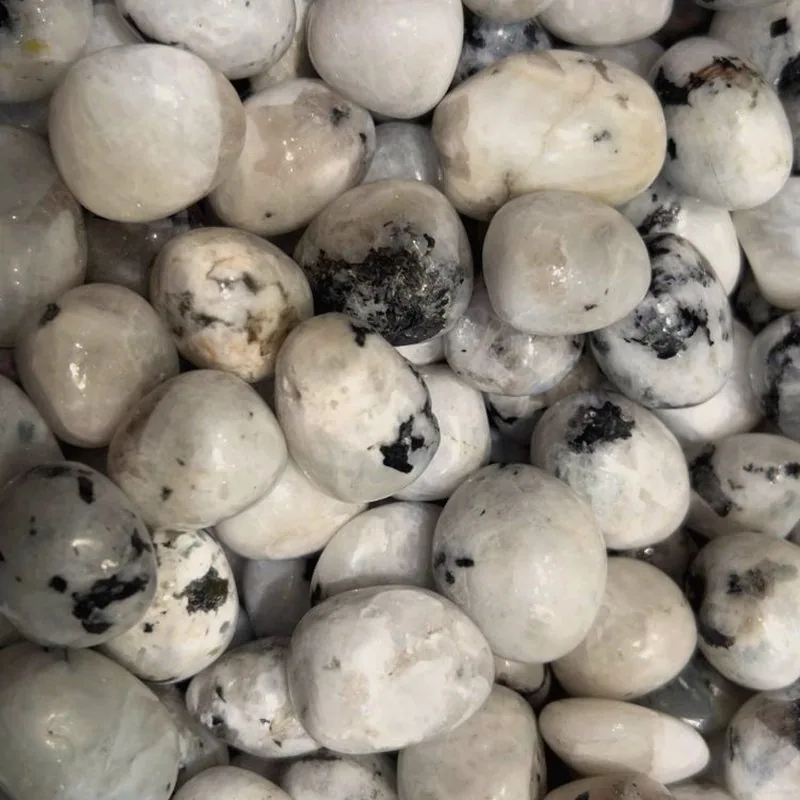
- India and Norway: India gives the white, see-through labradorite sold as rainbow moonstone; Norway gives larvikite, a related grey stone with silver-blue flashes.
The northern lights legend
A story often told says the northern lights were once trapped in the rocks along the coast of Labrador, until a warrior struck the stones with his spear and set most of them free. A few flashes were left behind, caught in every piece of labradorite.
It is easy to see why: the flash of a good piece looks very like the aurora rippling across a dark sky.
What labradorite is traditionally used for
That hidden flash has made labradorite a favourite for intuition, change and a little magic. It is linked with the third eye chakra for insight and the throat chakra for expression, and many people keep it as a protective stone through times of change.
- Intuition: held during meditation or kept by the bed.
- Change: carried through a new job, a move or a new chapter.
- Protection: traditionally said to shield your energy in busy places; see our protection page.
- Creativity: on a desk or in a studio, for new ideas.
How to choose labradorite
- Turn it: look for the angle where it flashes most, and how much of the surface lights up.
- Colour: blue is most common; gold, orange, pink and purple flashes are rarer and more sought after.
- Shape: palm stones, spheres and freeforms show the flash best because they catch light from many angles.
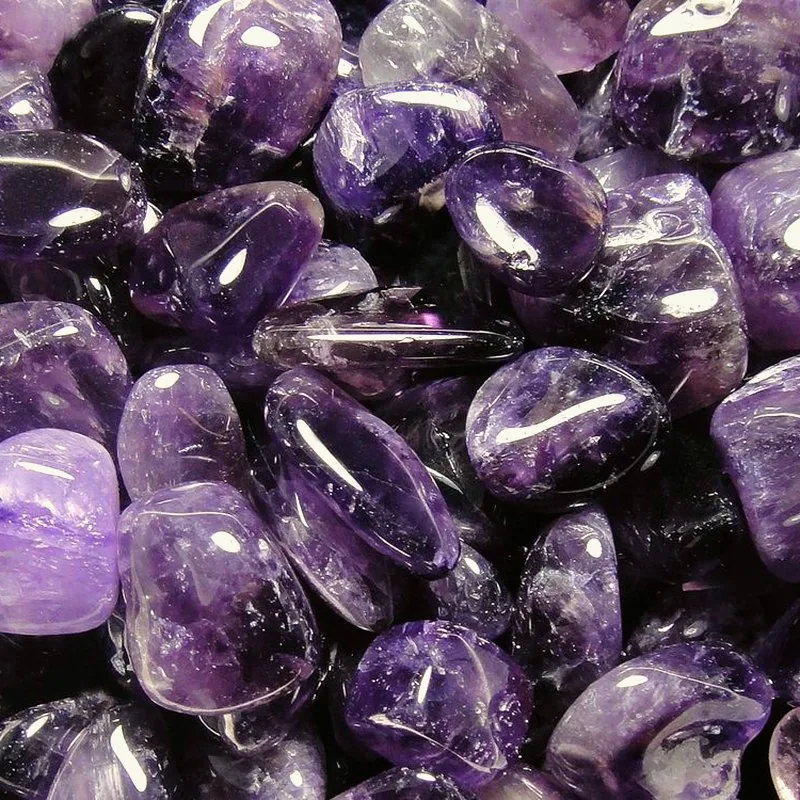
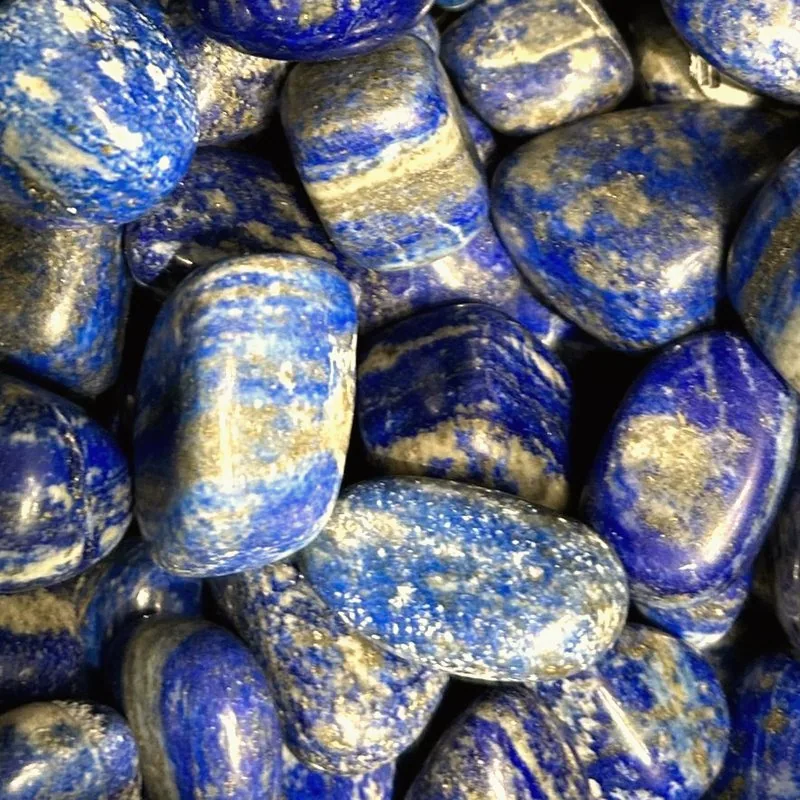
- With other stones: moonstone for intuition, amethyst for calm, black tourmaline for protection, lapis lazuli as a third eye partner.
Labradorite and star signs
In Judy Hall’s The Crystal Bible, the book we use in our shops, labradorite is linked with Sagittarius, Capricorn, Aquarius and Pisces.
Looking after labradorite
- Light: it won’t fade. Display it with light coming from the side, at an angle to a lamp or window, to show off the flash.
- Water: a quick rinse and dry is fine. Don’t soak it, and keep it away from salt and harsh cleaners.
- Knocks: softer than quartz, and it can split along its layers, so store it apart from harder stones.
- Cleansing: moonlight, a selenite plate or sound. See how to cleanse crystals.
More questions
Why does labradorite flash?
Light bounces between extremely thin layers inside the stone, an effect called labradorescence. Turn it slowly under a light to find its best angle.
What is spectrolite?
A very colourful labradorite from Finland, flashing across the whole rainbow on a black background.
Is rainbow moonstone labradorite?
Yes. Rainbow moonstone is a white, see-through labradorite. It is a natural stone, sold under a name the gem trade accepts.
Can labradorite go in water?
A quick rinse is fine. Don’t soak it, and avoid salt and harsh cleaners.
Is labradorite good for beginners?
Yes. Most people fall for the flash first. Just give it a little care, as it is softer than quartz.
What is labradorite good for?
Traditionally intuition, change, protection and creativity. Crystal meanings describe tradition and belief, not medical advice.
Crystal meanings describe tradition and belief, not medical advice. Star-sign links follow Judy Hall’s The Crystal Bible.