
Ammonite
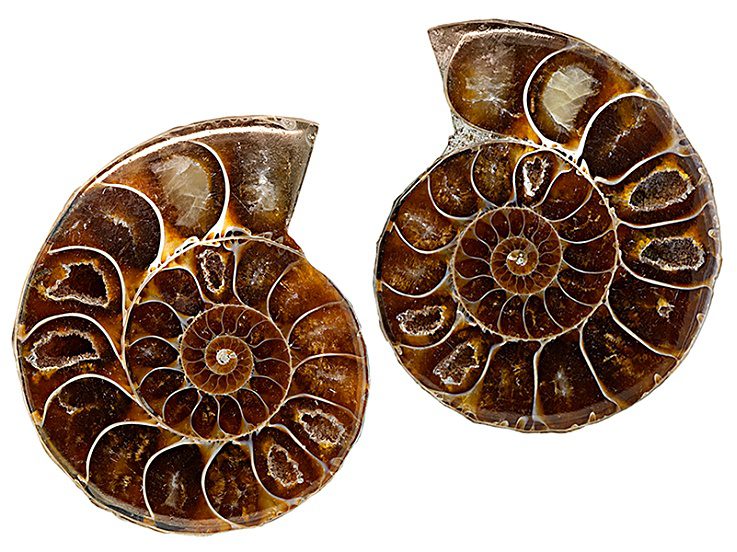
the spiral of timeThe fossil shell of a sea creature that lived in the oceans for millions of years and died out with the dinosaurs. Traditionally kept for change, growth and a sense of time.

What ammonite is said to do
Named after the Egyptian god Ammon, often shown with curling ram’s horns: the Roman writer Pliny called these fossils Ammonis cornua, the horns of Ammon. In Whitby, an old legend says St Hilda turned the local snakes to stone, which is why the town’s coat of arms carries ammonites.
Its perfect spiral has made it a stone for change and growth, and a reminder of how old the earth is.
Every ammonite piece, in one place
Goes well with ammonite

How to use it
Looking after your ammonite
Ammonite, answered
Still wondering? Ask us in the shop, or pop into The Cave for a reading.{{ item.a }}
{{ item.a }}
Ammonite
the spiral of timeThe fossil shell of an ancient sea creature. Traditionally kept for change, growth and grounding.
Shop ammonite · from £3Every ammonite piece
 We pick for you
Goes well with ammonite
What ammonite is said to do
Named after the Egyptian god Ammon and his ram’s horns. In Whitby, legend says St Hilda turned the local snakes into these stone spirals.
How to use it
Ammonite, answered
{{ item.a }}