✦ Free UK delivery over £40✦ Shop live with us by video, from anywhere →✦ Every £10 is a stamp towards a free pet rock
SpiritCrystals
Christmas at Highcross, LeicesterMeet Santa · Saturday 12 & 19 December11am–5pm · free with a completed festive loyalty cardFind out more →All December at Highcross, LeicesterA free geode to crack openpick up your free voucher in the shop · Highcross onlyFind out more →
✦ Free UK delivery over £40 · Shop live by video
SpiritCrystals
Meet Santa at HighcrossSat 12 & 19 Dec · 11am–5pm · LeicesterA free geode all DecemberVoucher in our Highcross shop · Leicester
Crystal guide · Online and in our shops

Aquamarine the sailor’s stone

Sea-blue beryl, named after sea water and carried by sailors for a safe voyage. The birthstone for March. Traditionally kept for calm, courage and clear speaking.

Shop aquamarine →All stones A–Z
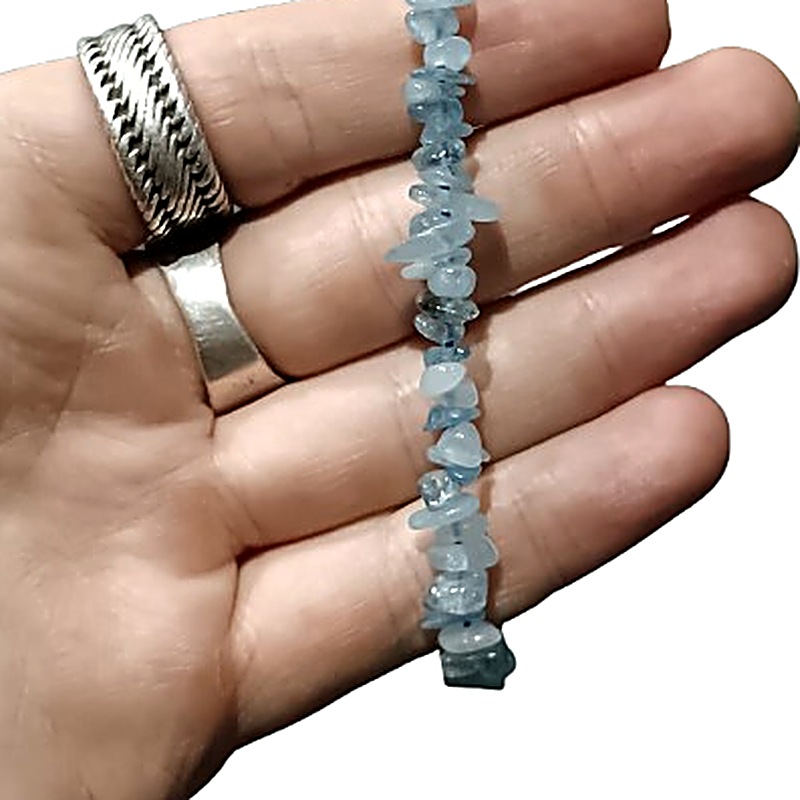
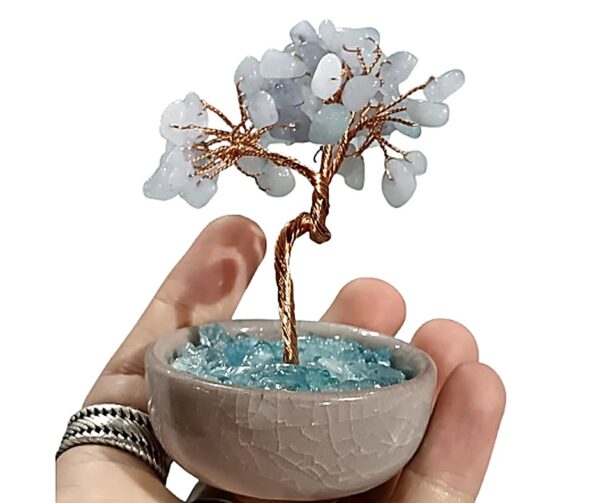
Bracelets and rough pieces online · silver pendants and earrings in our Highcross shop
In depth

Everything about aquamarine

What aquamarine is, its family link with emerald, where it comes from, why sailors carried it, what it has traditionally been used for, and how to look after it. Written by the team at our crystal shops in Derby and Leicester.

MineralBeryl
ColourPale sea blue to blue-green
Hardness7.5 to 8 out of 10
Found inBrazil, Pakistan, Madagascar, Nigeria
BirthstoneMarch
ChakraThroat · Heart
ZodiacPisces · Aries · Gemini
WaterSafe to rinse and dry

What aquamarine is

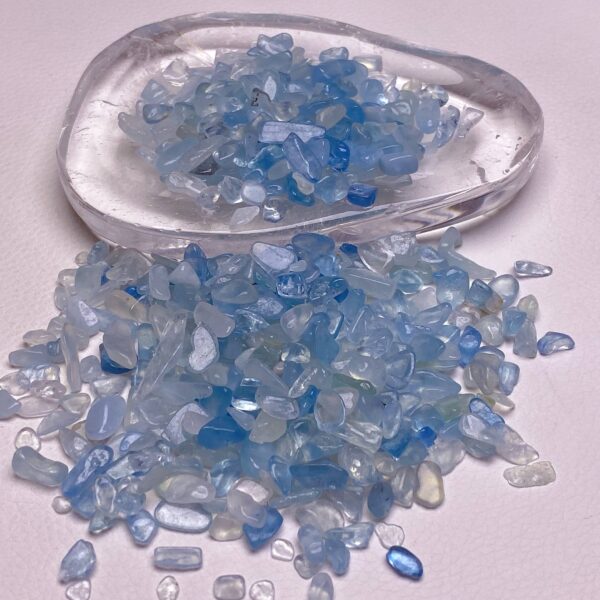
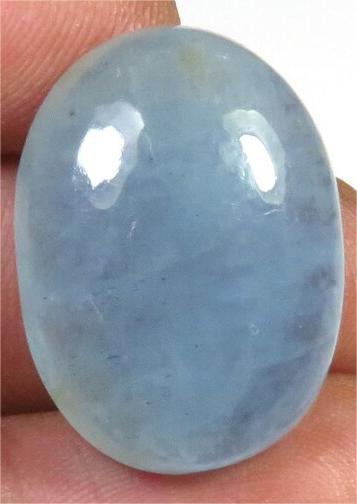
Aquamarine is the blue form of beryl, a mineral that grows as long, six-sided crystals, sometimes enormous ones. Tiny amounts of iron give it its colour, from the palest ice blue to a deep sea blue.

Its name comes from the Latin aqua marina, “sea water”. Emerald is the same mineral, coloured green by chromium, and morganite is its pink sister.

Where it comes from

Brazil is the most famous source: the largest gem aquamarine ever found, the Dom Pedro, was cut from a Brazilian crystal and is now in the Smithsonian museum in Washington. Fine aquamarine also comes from the mountains of Pakistan, Madagascar, Nigeria and Mozambique.

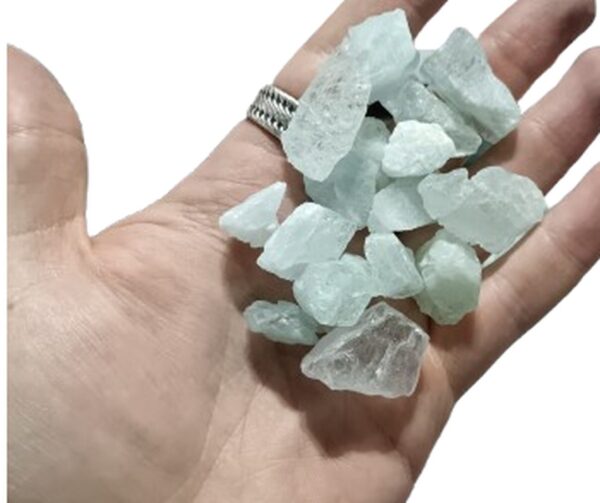
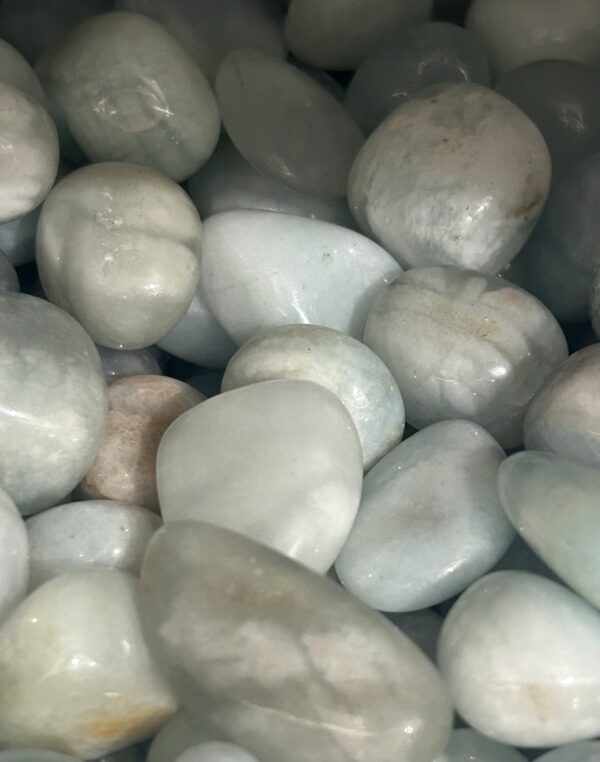
Many cut aquamarines are gently heated to remove a greenish tint and leave a purer blue. This is a standard, permanent and widely accepted treatment. Rough aquamarine and bead bracelets are usually left as they were found, with a softer, often slightly cloudy blue.

The sailor’s stone

With its sea-blue colour, aquamarine has long been linked with the sea. Sailors carried it as a charm for a calm voyage and a safe return, and it was said to keep away seasickness.

From there it became a stone of calm and courage in general, and of clear, honest speaking.

What aquamarine is traditionally used for

In crystal tradition, aquamarine is a soothing stone of calm, courage and clear communication. It is linked with the throat chakra, for speaking your truth, and the heart chakra.

  • Calm: worn or kept close; see calm and sleep.
  • Speaking up: for an interview, a talk or a difficult conversation; see our confidence page.
  • Travel: the traditional sailor’s charm, especially for journeys over water.
  • Birthdays: March’s birthstone; see our gift finder.

Looking after aquamarine

  • Water: fine. Rinse it and dry it. Bracelets on elastic are best kept out of hot water.
  • Sunlight: generally fine, though very pale stones are best kept out of strong sun for long periods.
  • Knocks: hard, but it can chip on a sharp knock. Take rings off for gardening and the gym.
  • Cleansing: running water, moonlight, a selenite plate or sound. See how to cleanse crystals.

More questions

What month is aquamarine the birthstone for?

March.

Is aquamarine the same as emerald?

They are the same mineral, beryl. Aquamarine is coloured blue by iron, emerald green by chromium.

Is aquamarine heat treated?

Many cut aquamarines are gently heated to remove a green tint. It is a standard, permanent treatment. Rough aquamarine usually isn’t.

Can aquamarine go in water?

Yes. Rinse it and dry it. Keep elastic bracelets out of hot water.

Why is aquamarine called the sailor’s stone?

Its sea-blue colour linked it with the sea, and sailors carried it for a calm voyage and a safe return.

What is aquamarine good for?

Traditionally calm, courage, clear speaking and safe travel. Crystal meanings describe tradition and belief, not medical advice.

Crystal meanings describe tradition and belief, not medical advice.

More guides: Birthstones by month · Real or fake crystals? · How to cleanse crystals · All stones A–Z

In depth

Everything about aquamarine

What aquamarine is, its family link with emerald, where it comes from, why sailors carried it, what it has traditionally been used for, and how to look after it. Written by the team at our crystal shops in Derby and Leicester.

MineralBeryl
ColourPale sea blue to blue-green
Hardness7.5 to 8 out of 10
Found inBrazil, Pakistan, Madagascar, Nigeria
BirthstoneMarch
ChakraThroat · Heart
ZodiacPisces · Aries · Gemini
WaterSafe to rinse and dry

What aquamarine is

Aquamarine is the blue form of beryl, a mineral that grows as long, six-sided crystals, sometimes enormous ones. Tiny amounts of iron give it its colour, from the palest ice blue to a deep sea blue.

Its name comes from the Latin aqua marina, “sea water”. Emerald is the same mineral, coloured green by chromium, and morganite is its pink sister.

Where it comes from

Brazil is the most famous source: the largest gem aquamarine ever found, the Dom Pedro, was cut from a Brazilian crystal and is now in the Smithsonian museum in Washington. Fine aquamarine also comes from the mountains of Pakistan, Madagascar, Nigeria and Mozambique.

Many cut aquamarines are gently heated to remove a greenish tint and leave a purer blue. This is a standard, permanent and widely accepted treatment. Rough aquamarine and bead bracelets are usually left as they were found, with a softer, often slightly cloudy blue.

The sailor’s stone

With its sea-blue colour, aquamarine has long been linked with the sea. Sailors carried it as a charm for a calm voyage and a safe return, and it was said to keep away seasickness.

From there it became a stone of calm and courage in general, and of clear, honest speaking.

What aquamarine is traditionally used for

In crystal tradition, aquamarine is a soothing stone of calm, courage and clear communication. It is linked with the throat chakra, for speaking your truth, and the heart chakra.

  • Calm: worn or kept close; see calm and sleep.
  • Speaking up: for an interview, a talk or a difficult conversation; see our confidence page.
  • Travel: the traditional sailor’s charm, especially for journeys over water.
  • Birthdays: March’s birthstone; see our gift finder.

Looking after aquamarine

  • Water: fine. Rinse it and dry it. Bracelets on elastic are best kept out of hot water.
  • Sunlight: generally fine, though very pale stones are best kept out of strong sun for long periods.
  • Knocks: hard, but it can chip on a sharp knock. Take rings off for gardening and the gym.
  • Cleansing: running water, moonlight, a selenite plate or sound. See how to cleanse crystals.

More questions

What month is aquamarine the birthstone for?

March.

Is aquamarine the same as emerald?

They are the same mineral, beryl. Aquamarine is coloured blue by iron, emerald green by chromium.

Is aquamarine heat treated?

Many cut aquamarines are gently heated to remove a green tint. It is a standard, permanent treatment. Rough aquamarine usually isn’t.

Can aquamarine go in water?

Yes. Rinse it and dry it. Keep elastic bracelets out of hot water.

Why is aquamarine called the sailor’s stone?

Its sea-blue colour linked it with the sea, and sailors carried it for a calm voyage and a safe return.

What is aquamarine good for?

Traditionally calm, courage, clear speaking and safe travel. Crystal meanings describe tradition and belief, not medical advice.

Crystal meanings describe tradition and belief, not medical advice.

More guides: Birthstones by month · Real or fake crystals? · How to cleanse crystals · All stones A–Z

Shop aquamarine