✦ Free UK delivery over £40✦ Shop live with us by video, from anywhere →✦ Every £10 is a stamp towards a free pet rock
SpiritCrystals
Christmas at Highcross, LeicesterMeet Santa · Saturday 12 & 19 December11am–5pm · free with a completed festive loyalty cardFind out more →All December at Highcross, LeicesterA free geode to crack openpick up your free voucher in the shop · Highcross onlyFind out more →
✦ Free UK delivery over £40 · Shop live by video
SpiritCrystals
Meet Santa at HighcrossSat 12 & 19 Dec · 11am–5pm · LeicesterA free geode all DecemberVoucher in our Highcross shop · Leicester
Crystal guide · Online and in our shops

Garnet January’s birthstone

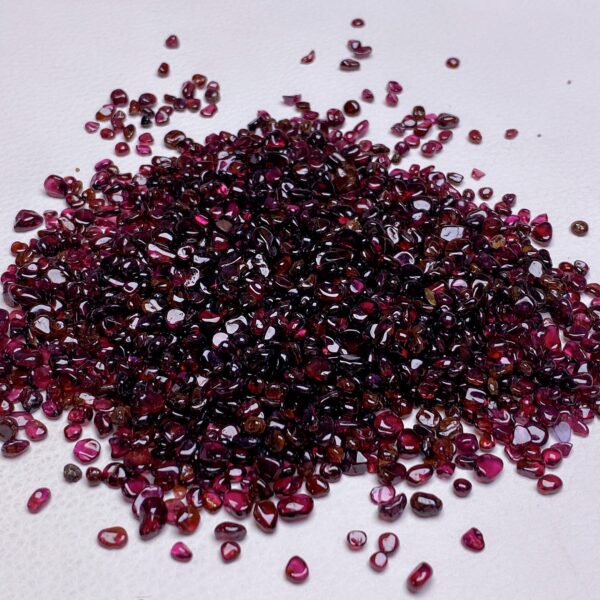
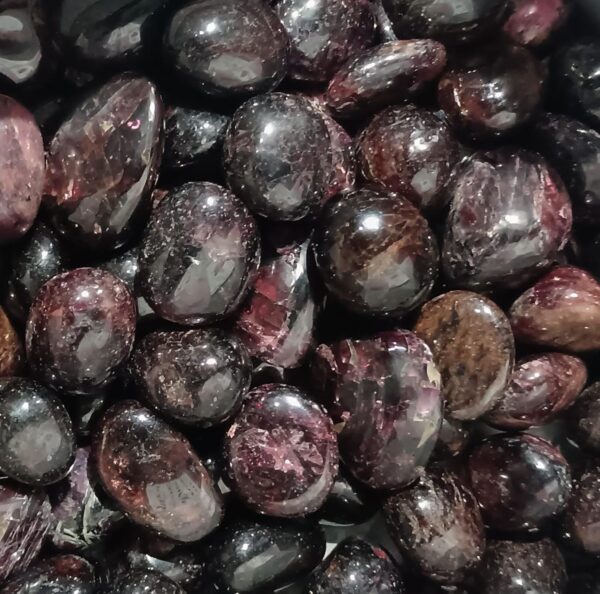
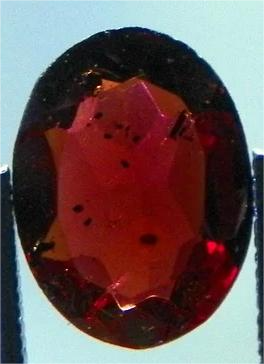
A deep red stone the Anglo-Saxons set by the thousand into gold, and the birthstone for January. Traditionally kept for passion, energy and commitment.

Shop garnet →All stones A–Z
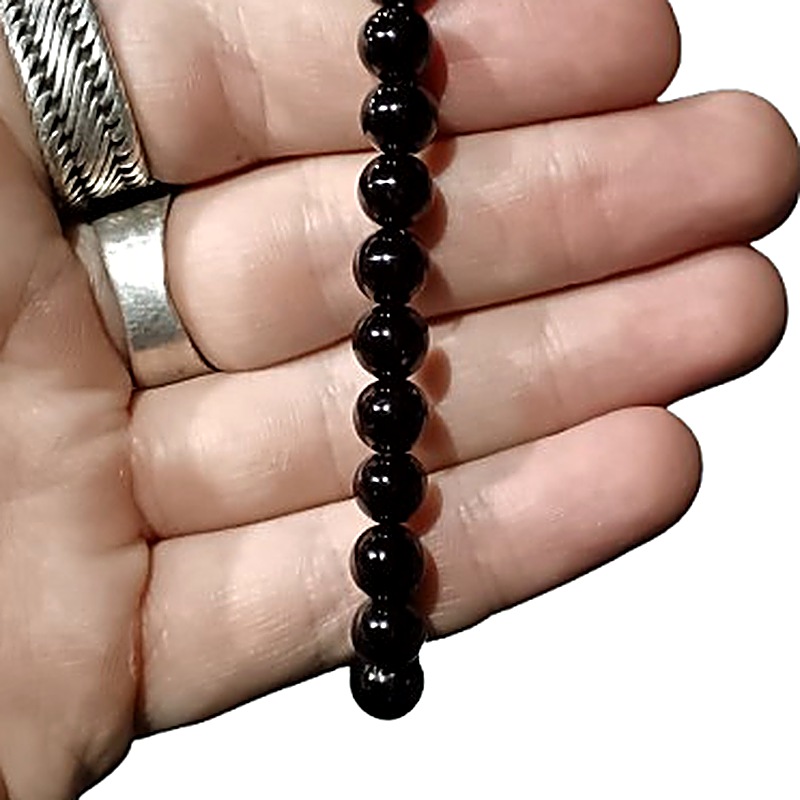
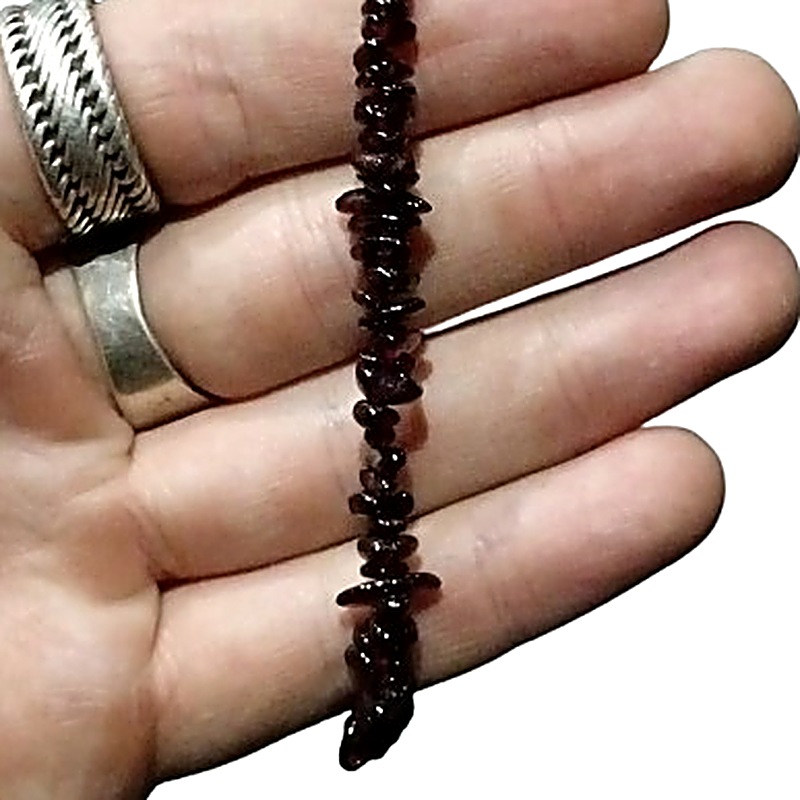
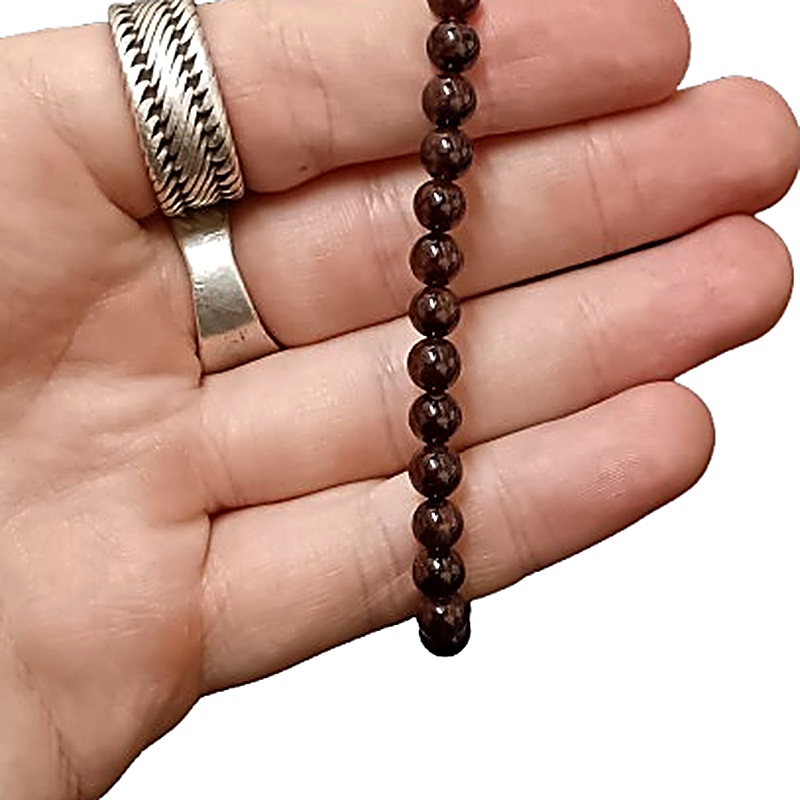
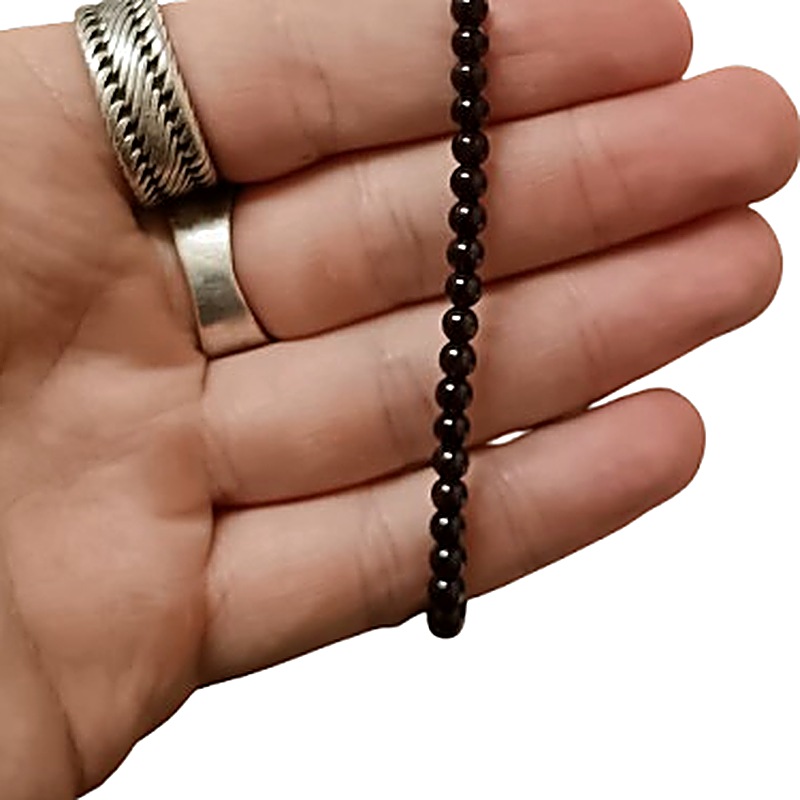
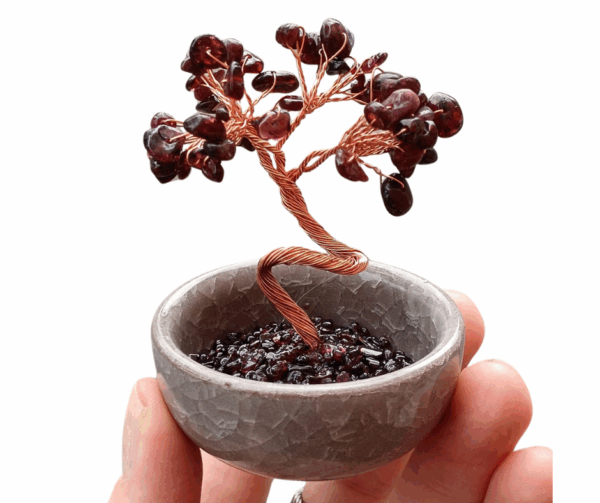
Tumblestones and bracelets online and in our Derby and Leicester shops
In depth

Everything about garnet

What garnet is, the colourful garnet family, the Anglo-Saxon gold and garnet treasures found not far from our Derby shop, what garnet has traditionally been used for, and how to look after it. Written by the team at our crystal shops in Derby and Leicester.

MineralGarnet group (silicates)
ColourDeep red, also orange, green, purple
Hardness6.5 to 7.5 out of 10
Found inIndia, Madagascar, Africa, Czech Republic
BirthstoneJanuary
ChakraRoot · Heart
ZodiacAquarius · Capricorn · Leo · Virgo
WaterSafe to rinse and dry

What garnet is

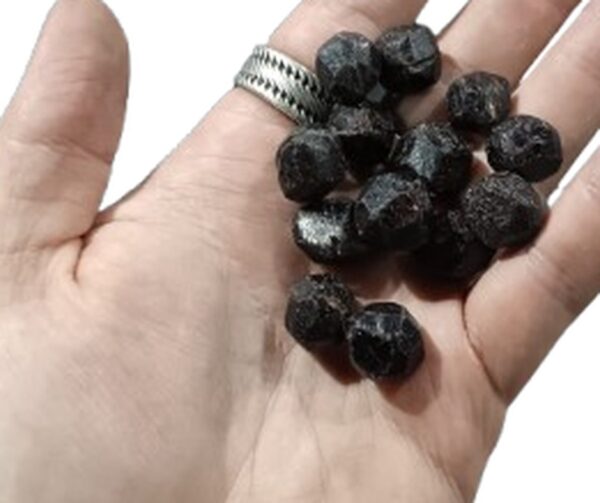
Garnet is not one mineral but a family of closely related minerals that share the same crystal shape. In the rock they grow as rounded, many-sided crystals, often like little balls with twelve faces, which is why rough garnets look a lot like pomegranate seeds.

That is where the name comes from: the Latin granatum, pomegranate. Garnets are found all over the world, including in Scotland and the Czech Republic, whose deep red Bohemian garnets were fashionable across Victorian Europe.

The garnet family

  • Almandine: the deep, dark red garnet most people know.
  • Pyrope: blood red; the Bohemian garnet of the Czech Republic.
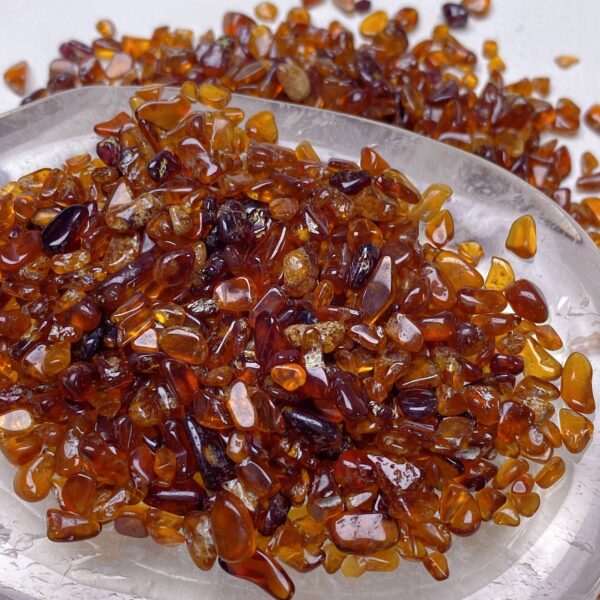
  • Spessartine: bright orange, sometimes sold as orange or mandarin garnet.
  • Grossular: green to golden; includes tsavorite from Kenya and Tanzania.
  • Andradite: includes demantoid, a rare green garnet with more fire than diamond.
  • Rhodolite: a raspberry-pink to purple mix of pyrope and almandine.

Gold and garnet: the Staffordshire Hoard

In 2009 a metal detectorist in a field in Staffordshire found the largest hoard of Anglo-Saxon gold ever discovered, now shared between the museums in Birmingham and Stoke-on-Trent. Much of it is decorated with garnets: thousands of tiny pieces, each cut by hand to fit its own little gold cell, a technique called cloisonné.

The famous ship burial at Sutton Hoo in Suffolk is decorated the same way. Scientists have traced many of the Anglo-Saxon garnets to India and Sri Lanka, thousands of miles away.

What garnet is traditionally used for

In crystal tradition, garnet is a warm stone of passion, energy and commitment, linked with the root chakra for grounding and the heart chakra for love. It was also an old travellers’ stone, carried for a safe journey home.

  • Passion: a traditional stone of love and loyalty; see crystals for love.
  • Energy: carried for drive and stamina.
  • Protection: an old travellers’ charm; see our protection page.
  • Birthdays: January’s birthstone; see our gift finder.

Looking after garnet

  • Water: fine. Rinse it and dry it straight away.
  • Sunlight: fine. Garnet doesn’t fade.
  • Heat: avoid sudden temperature changes, which can crack it.
  • Cleansing: running water, moonlight, a selenite plate or sound. See how to cleanse crystals.

More questions

What month is garnet the birthstone for?

January.

Are all garnets red?

No. Garnet is a family of minerals in red, orange, green, pink, purple and more. Only blue garnet is extremely rare.

Where does the name garnet come from?

From the Latin granatum, pomegranate, because rough garnets look like pomegranate seeds.

Can garnet go in water?

Yes. Rinse it and dry it straight away.

What star sign is garnet for?

Capricorn and Aquarius, as January’s birthstone, and traditionally Leo and Virgo.

What is garnet good for?

Traditionally passion, energy, commitment and safe travel. Crystal meanings describe tradition and belief, not medical advice.

Crystal meanings describe tradition and belief, not medical advice.

More guides: Birthstones by month · Real or fake crystals? · How to cleanse crystals · All stones A–Z

In depth

Everything about garnet

What garnet is, the colourful garnet family, the Anglo-Saxon gold and garnet treasures found not far from our Derby shop, what garnet has traditionally been used for, and how to look after it. Written by the team at our crystal shops in Derby and Leicester.

MineralGarnet group (silicates)
ColourDeep red, also orange, green, purple
Hardness6.5 to 7.5 out of 10
Found inIndia, Madagascar, Africa, Czech Republic
BirthstoneJanuary
ChakraRoot · Heart
ZodiacAquarius · Capricorn · Leo · Virgo
WaterSafe to rinse and dry

What garnet is

Garnet is not one mineral but a family of closely related minerals that share the same crystal shape. In the rock they grow as rounded, many-sided crystals, often like little balls with twelve faces, which is why rough garnets look a lot like pomegranate seeds.

That is where the name comes from: the Latin granatum, pomegranate. Garnets are found all over the world, including in Scotland and the Czech Republic, whose deep red Bohemian garnets were fashionable across Victorian Europe.

The garnet family

  • Almandine: the deep, dark red garnet most people know.
  • Pyrope: blood red; the Bohemian garnet of the Czech Republic.
  • Spessartine: bright orange, sometimes sold as orange or mandarin garnet.
  • Grossular: green to golden; includes tsavorite from Kenya and Tanzania.
  • Andradite: includes demantoid, a rare green garnet with more fire than diamond.
  • Rhodolite: a raspberry-pink to purple mix of pyrope and almandine.

Gold and garnet: the Staffordshire Hoard

In 2009 a metal detectorist in a field in Staffordshire found the largest hoard of Anglo-Saxon gold ever discovered, now shared between the museums in Birmingham and Stoke-on-Trent. Much of it is decorated with garnets: thousands of tiny pieces, each cut by hand to fit its own little gold cell, a technique called cloisonné.

The famous ship burial at Sutton Hoo in Suffolk is decorated the same way. Scientists have traced many of the Anglo-Saxon garnets to India and Sri Lanka, thousands of miles away.

What garnet is traditionally used for

In crystal tradition, garnet is a warm stone of passion, energy and commitment, linked with the root chakra for grounding and the heart chakra for love. It was also an old travellers’ stone, carried for a safe journey home.

  • Passion: a traditional stone of love and loyalty; see crystals for love.
  • Energy: carried for drive and stamina.
  • Protection: an old travellers’ charm; see our protection page.
  • Birthdays: January’s birthstone; see our gift finder.

Looking after garnet

  • Water: fine. Rinse it and dry it straight away.
  • Sunlight: fine. Garnet doesn’t fade.
  • Heat: avoid sudden temperature changes, which can crack it.
  • Cleansing: running water, moonlight, a selenite plate or sound. See how to cleanse crystals.

More questions

What month is garnet the birthstone for?

January.

Are all garnets red?

No. Garnet is a family of minerals in red, orange, green, pink, purple and more. Only blue garnet is extremely rare.

Where does the name garnet come from?

From the Latin granatum, pomegranate, because rough garnets look like pomegranate seeds.

Can garnet go in water?

Yes. Rinse it and dry it straight away.

What star sign is garnet for?

Capricorn and Aquarius, as January’s birthstone, and traditionally Leo and Virgo.

What is garnet good for?

Traditionally passion, energy, commitment and safe travel. Crystal meanings describe tradition and belief, not medical advice.

Crystal meanings describe tradition and belief, not medical advice.

More guides: Birthstones by month · Real or fake crystals? · How to cleanse crystals · All stones A–Z

Shop garnet