✦ Free UK delivery over £40✦ Shop live with us by video, from anywhere →✦ Every £10 is a stamp towards a free pet rock
SpiritCrystals
Christmas at Highcross, LeicesterMeet Santa · Saturday 12 & 19 December11am–5pm · free with a completed festive loyalty cardFind out more →All December at Highcross, LeicesterA free geode to crack openpick up your free voucher in the shop · Highcross onlyFind out more →
✦ Free UK delivery over £40 · Shop live by video
SpiritCrystals
Meet Santa at HighcrossSat 12 & 19 Dec · 11am–5pm · LeicesterA free geode all DecemberVoucher in our Highcross shop · Leicester
Crystal guide · Online and in our shops

Chalcopyrite peacock ore

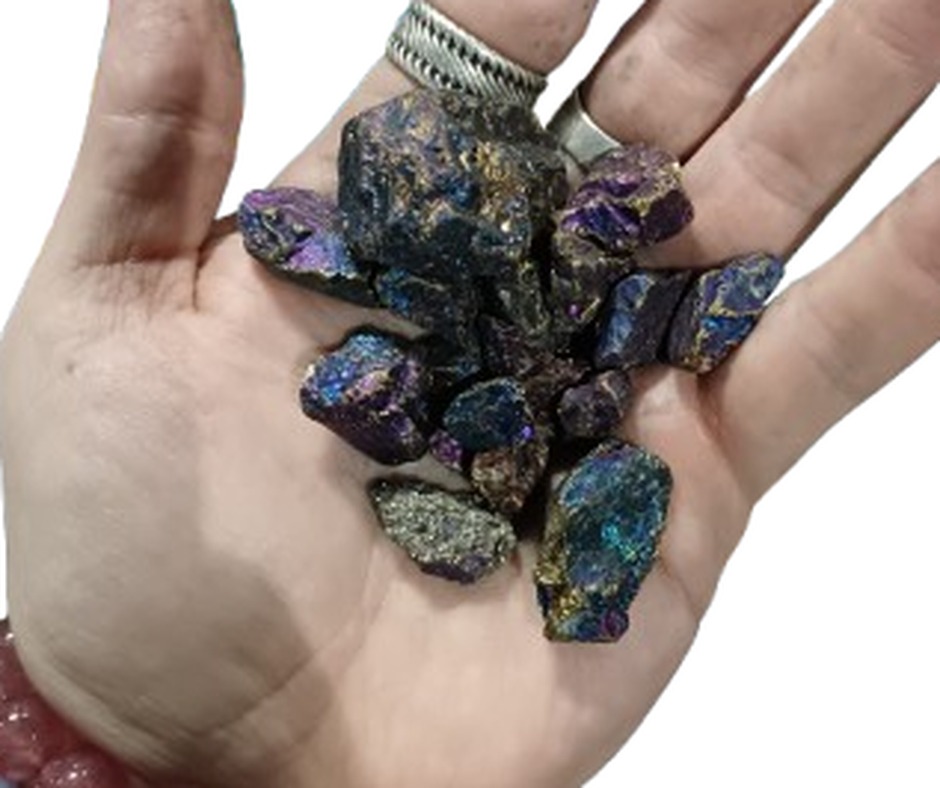
A brassy copper ore that tarnishes in rainbow blues, purples and golds, often sold as peacock ore. Traditionally kept for joy and abundance. Also: why most peacock ore is acid-treated.

Shop peacock ore →All stones A–Z
Rough chunks online and in our Derby and Leicester shops
In depth

Everything about chalcopyrite

What chalcopyrite is, why it is the world’s most important copper ore, the honest truth about bright “peacock ore”, how to handle it, what it has traditionally been used for, and how to look after it. Written by the team at our crystal shops in Derby and Leicester.

MineralCopper iron sulphide
ColourBrassy gold, tarnishing to rainbow
StreakGreenish black
Hardness3.5 to 4 out of 10
Found inWorldwide, including Mexico, Peru and Cornwall
Also sold asPeacock ore
WaterKeep it dry, no elixirs
SunlightColours may slowly dull

What chalcopyrite is

Chalcopyrite is a copper iron sulphide, and the most important source of copper in the world. Fresh, it is a brassy golden yellow, a little greener and softer than pyrite. Like pyrite, it has been mistaken for gold, and both are sometimes called fool’s gold.

Its name comes from the Greek chalkos, “copper”, added to pyrite. In Britain it was mined for centuries in Cornwall and Devon, alongside tin.

The truth about peacock ore

Left in the air, chalcopyrite slowly tarnishes with a thin film that shows blues, purples and golds. That rainbow is where the name peacock ore comes from.

Strictly, “peacock ore” is an old miners’ name for bornite, another copper mineral that tarnishes purple and blue. Today, most of the bright, vivid peacock ore on sale is chalcopyrite (or sometimes bornite) that has been treated with acid to bring out strong colours quickly. The mineral is real, and the colours are a real tarnish, but they have been sped up and made brighter than nature usually manages.

We think it is a lovely stone either way, and we would rather you knew how it is made.

Handling chalcopyrite safely

  • No elixirs: never put it in drinking water or use it to make crystal water. It contains copper and sulphur.
  • Wash your hands: after handling rough pieces.
  • Keep away from children and pets: don’t let anyone lick, chew or swallow it.

What chalcopyrite is traditionally used for

In crystal tradition, chalcopyrite is a bright, cheerful stone of joy and abundance, and its rainbow colours make it popular for lifting the mood.

  • Abundance: golden like pyrite; see our abundance page.
  • Luck: kept on a desk or shelf; see our luck page.
  • Joy: its colours make it a favourite for a happy space.
  • Display: a colourful piece for a shelf or mineral collection.

Chalcopyrite and other stones

Chalcopyrite isn’t strongly tied to one star sign in tradition.

It pairs well with pyrite for abundance, bismuth, another rainbow metal, citrine for joy and malachite, another copper mineral.

Looking after chalcopyrite

  • Water: keep it dry. Water and damp can dull the colours and make it rust.
  • Touch: handle it as little as needed, as oils from skin can dull the colours.
  • Sunlight: keep it out of strong sun. The colours may slowly change.
  • Knocks: fairly soft and brittle. Keep it on its own.
  • Cleansing: moonlight, a selenite plate or sound, never water or salt. See which crystals can’t go in water.

More questions

Is peacock ore natural?

The mineral is natural, but most bright peacock ore has been treated with acid to bring out strong colours. The colours are a real tarnish, sped up.

Is peacock ore chalcopyrite or bornite?

The name first meant bornite, but most peacock ore sold today is chalcopyrite.

Is chalcopyrite fool’s gold?

It is sometimes called that, along with pyrite. Chalcopyrite is a little greener and softer.

Can chalcopyrite go in water?

No. Keep it dry, and never use it to make crystal water. Wash your hands after handling rough pieces.

Will the colours on my peacock ore fade?

They can slowly change or dull over time, especially with damp, sunlight and handling.

What is chalcopyrite good for?

Traditionally joy, abundance and good luck. Crystal meanings describe tradition and belief, not medical advice.

Crystal meanings describe tradition and belief, not medical advice.

More guides: Birthstones by month · Real or fake crystals? · How to cleanse crystals · All stones A–Z

In depth

Everything about chalcopyrite

What chalcopyrite is, why it is the world’s most important copper ore, the honest truth about bright “peacock ore”, how to handle it, what it has traditionally been used for, and how to look after it. Written by the team at our crystal shops in Derby and Leicester.

MineralCopper iron sulphide
ColourBrassy gold, tarnishing to rainbow
StreakGreenish black
Hardness3.5 to 4 out of 10
Found inWorldwide, including Mexico, Peru and Cornwall
Also sold asPeacock ore
WaterKeep it dry, no elixirs
SunlightColours may slowly dull

What chalcopyrite is

Chalcopyrite is a copper iron sulphide, and the most important source of copper in the world. Fresh, it is a brassy golden yellow, a little greener and softer than pyrite. Like pyrite, it has been mistaken for gold, and both are sometimes called fool’s gold.

Its name comes from the Greek chalkos, “copper”, added to pyrite. In Britain it was mined for centuries in Cornwall and Devon, alongside tin.

The truth about peacock ore

Left in the air, chalcopyrite slowly tarnishes with a thin film that shows blues, purples and golds. That rainbow is where the name peacock ore comes from.

Strictly, “peacock ore” is an old miners’ name for bornite, another copper mineral that tarnishes purple and blue. Today, most of the bright, vivid peacock ore on sale is chalcopyrite (or sometimes bornite) that has been treated with acid to bring out strong colours quickly. The mineral is real, and the colours are a real tarnish, but they have been sped up and made brighter than nature usually manages.

We think it is a lovely stone either way, and we would rather you knew how it is made.

Handling chalcopyrite safely

  • No elixirs: never put it in drinking water or use it to make crystal water. It contains copper and sulphur.
  • Wash your hands: after handling rough pieces.
  • Keep away from children and pets: don’t let anyone lick, chew or swallow it.

What chalcopyrite is traditionally used for

In crystal tradition, chalcopyrite is a bright, cheerful stone of joy and abundance, and its rainbow colours make it popular for lifting the mood.

  • Abundance: golden like pyrite; see our abundance page.
  • Luck: kept on a desk or shelf; see our luck page.
  • Joy: its colours make it a favourite for a happy space.
  • Display: a colourful piece for a shelf or mineral collection.

Chalcopyrite and other stones

Chalcopyrite isn’t strongly tied to one star sign in tradition.

It pairs well with pyrite for abundance, bismuth, another rainbow metal, citrine for joy and malachite, another copper mineral.

Looking after chalcopyrite

  • Water: keep it dry. Water and damp can dull the colours and make it rust.
  • Touch: handle it as little as needed, as oils from skin can dull the colours.
  • Sunlight: keep it out of strong sun. The colours may slowly change.
  • Knocks: fairly soft and brittle. Keep it on its own.
  • Cleansing: moonlight, a selenite plate or sound, never water or salt. See which crystals can’t go in water.

More questions

Is peacock ore natural?

The mineral is natural, but most bright peacock ore has been treated with acid to bring out strong colours. The colours are a real tarnish, sped up.

Is peacock ore chalcopyrite or bornite?

The name first meant bornite, but most peacock ore sold today is chalcopyrite.

Is chalcopyrite fool’s gold?

It is sometimes called that, along with pyrite. Chalcopyrite is a little greener and softer.

Can chalcopyrite go in water?

No. Keep it dry, and never use it to make crystal water. Wash your hands after handling rough pieces.

Will the colours on my peacock ore fade?

They can slowly change or dull over time, especially with damp, sunlight and handling.

What is chalcopyrite good for?

Traditionally joy, abundance and good luck. Crystal meanings describe tradition and belief, not medical advice.

Crystal meanings describe tradition and belief, not medical advice.

More guides: Birthstones by month · Real or fake crystals? · How to cleanse crystals · All stones A–Z

Shop peacock ore