✦ Free UK delivery over £40✦ Shop live with us by video, from anywhere →✦ Every £10 is a stamp towards a free pet rock
SpiritCrystals
Christmas at Highcross, LeicesterMeet Santa · Saturday 12 & 19 December11am–5pm · free with a completed festive loyalty cardFind out more →All December at Highcross, LeicesterA free geode to crack openpick up your free voucher in the shop · Highcross onlyFind out more →
✦ Free UK delivery over £40 · Shop live by video
SpiritCrystals
Meet Santa at HighcrossSat 12 & 19 Dec · 11am–5pm · LeicesterA free geode all DecemberVoucher in our Highcross shop · Leicester
Crystal guide · Online and in our shops

Kunzite the evening stone

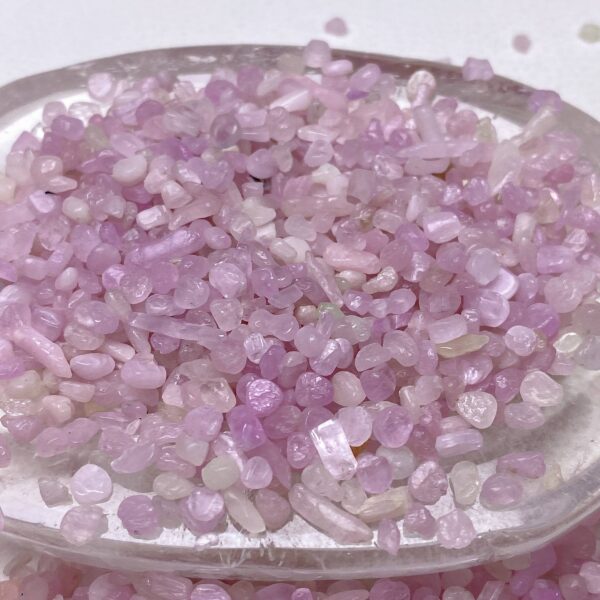
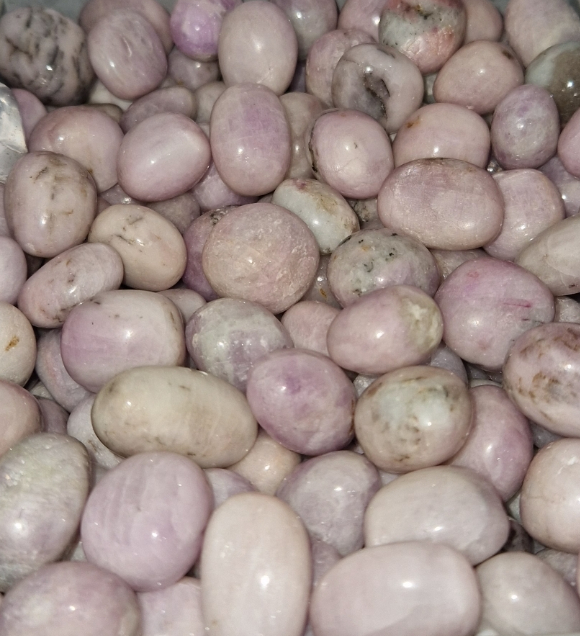
A soft pink to lilac crystal named after a Tiffany gem expert, and known as the evening stone because sunlight fades it. Traditionally kept for love and an open heart.

Shop kunzite →All stones A–Z
Rough pieces online and in our Derby and Leicester shops
In depth

Everything about kunzite

What kunzite is, the Tiffany gem expert it is named after, why it is called the evening stone, what it has traditionally been used for, and how to keep its pink from fading. Written by the team at our crystal shops in Derby and Leicester.

MineralSpodumene
ColourPale pink to lilac
Hardness6.5 to 7, but splits easily
Found inAfghanistan, Brazil, Pakistan, USA
ChakraHeart
ZodiacTaurus · Leo
WaterSafe to rinse and dry
SunlightFades: keep out of sun

What kunzite is

Kunzite is the pink to lilac variety of spodumene, a lithium aluminium silicate. Manganese gives it its colour. The green variety of the same mineral is called hiddenite, and ordinary grey-white spodumene is one of the world’s main sources of lithium for batteries.

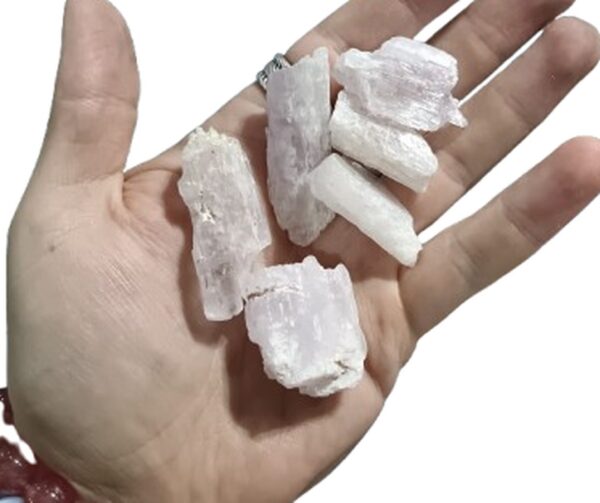
Kunzite crystals are often long and flat, with lined, etched sides. Look along the length of a crystal and the pink usually looks deeper than from the side.

Named after a Tiffany gem expert

Kunzite was described in 1903 from crystals found at Pala, in San Diego County, California. It was named after George Frederick Kunz, the famous gem expert at Tiffany & Co. in New York, who did much to make American gemstones known around the world.

Today most kunzite comes from Afghanistan, Pakistan and Brazil, with some still from California and Madagascar.

The evening stone

Kunzite has a weakness: its pink fades in sunlight. A crystal left on a sunny windowsill can lose much of its colour over months, and some pale stones fade faster. Heat can fade it too.

That is why kunzite is often called the evening stone. Jewellers suggest wearing it in the evening and keeping it in a box or drawer the rest of the time. Some kunzite is irradiated or heated to change its colour, and that colour can fade as well.

What kunzite is traditionally used for

In crystal tradition, kunzite is a soft, gentle stone of love, compassion and an open heart. It is linked with the heart chakra.

  • Love: for loving kindness, to yourself and others; see our love page.
  • Calm: for a peaceful, settled heart; see calm and sleep.
  • Meditation: a rough piece held in the hand during quiet time.

Looking after kunzite

  • Sunlight and heat: the most important rule. Keep it out of the sun and away from heat, in a drawer or box when not on show.
  • Water: a rinse is fine. Dry it well, and avoid sudden changes of temperature.
  • Knocks: kunzite is hard but splits easily along its length. Handle it gently and store it on its own.
  • Cleansing: moonlight, a selenite plate or sound, never sunlight. See how to cleanse crystals.

More questions

Does kunzite fade?

Yes. Its pink fades in sunlight and heat, so keep it out of the sun and in a drawer or box.

Why is kunzite called the evening stone?

Because sunlight fades it, so it has traditionally been worn in the evening and kept away from daylight.

Who is kunzite named after?

George Frederick Kunz, the gem expert at Tiffany & Co. It was named in his honour in 1903.

Can kunzite go in water?

Yes. Rinse it and dry it, and avoid sudden changes of temperature.

What star sign is kunzite for?

It is traditionally linked with Taurus and Leo.

What is kunzite good for?

Traditionally love, compassion and an open heart. Crystal meanings describe tradition and belief, not medical advice.

Crystal meanings describe tradition and belief, not medical advice.

More guides: Birthstones by month · Real or fake crystals? · How to cleanse crystals · All stones A–Z

In depth

Everything about kunzite

What kunzite is, the Tiffany gem expert it is named after, why it is called the evening stone, what it has traditionally been used for, and how to keep its pink from fading. Written by the team at our crystal shops in Derby and Leicester.

MineralSpodumene
ColourPale pink to lilac
Hardness6.5 to 7, but splits easily
Found inAfghanistan, Brazil, Pakistan, USA
ChakraHeart
ZodiacTaurus · Leo
WaterSafe to rinse and dry
SunlightFades: keep out of sun

What kunzite is

Kunzite is the pink to lilac variety of spodumene, a lithium aluminium silicate. Manganese gives it its colour. The green variety of the same mineral is called hiddenite, and ordinary grey-white spodumene is one of the world’s main sources of lithium for batteries.

Kunzite crystals are often long and flat, with lined, etched sides. Look along the length of a crystal and the pink usually looks deeper than from the side.

Named after a Tiffany gem expert

Kunzite was described in 1903 from crystals found at Pala, in San Diego County, California. It was named after George Frederick Kunz, the famous gem expert at Tiffany & Co. in New York, who did much to make American gemstones known around the world.

Today most kunzite comes from Afghanistan, Pakistan and Brazil, with some still from California and Madagascar.

The evening stone

Kunzite has a weakness: its pink fades in sunlight. A crystal left on a sunny windowsill can lose much of its colour over months, and some pale stones fade faster. Heat can fade it too.

That is why kunzite is often called the evening stone. Jewellers suggest wearing it in the evening and keeping it in a box or drawer the rest of the time. Some kunzite is irradiated or heated to change its colour, and that colour can fade as well.

What kunzite is traditionally used for

In crystal tradition, kunzite is a soft, gentle stone of love, compassion and an open heart. It is linked with the heart chakra.

  • Love: for loving kindness, to yourself and others; see our love page.
  • Calm: for a peaceful, settled heart; see calm and sleep.
  • Meditation: a rough piece held in the hand during quiet time.

Looking after kunzite

  • Sunlight and heat: the most important rule. Keep it out of the sun and away from heat, in a drawer or box when not on show.
  • Water: a rinse is fine. Dry it well, and avoid sudden changes of temperature.
  • Knocks: kunzite is hard but splits easily along its length. Handle it gently and store it on its own.
  • Cleansing: moonlight, a selenite plate or sound, never sunlight. See how to cleanse crystals.

More questions

Does kunzite fade?

Yes. Its pink fades in sunlight and heat, so keep it out of the sun and in a drawer or box.

Why is kunzite called the evening stone?

Because sunlight fades it, so it has traditionally been worn in the evening and kept away from daylight.

Who is kunzite named after?

George Frederick Kunz, the gem expert at Tiffany & Co. It was named in his honour in 1903.

Can kunzite go in water?

Yes. Rinse it and dry it, and avoid sudden changes of temperature.

What star sign is kunzite for?

It is traditionally linked with Taurus and Leo.

What is kunzite good for?

Traditionally love, compassion and an open heart. Crystal meanings describe tradition and belief, not medical advice.

Crystal meanings describe tradition and belief, not medical advice.

More guides: Birthstones by month · Real or fake crystals? · How to cleanse crystals · All stones A–Z

Shop kunzite