✦ Free UK delivery over £40✦ Shop live with us by video, from anywhere →✦ Every £10 is a stamp towards a free pet rock
SpiritCrystals
Christmas at Highcross, LeicesterMeet Santa · Saturday 12 & 19 December11am–5pm · free with a completed festive loyalty cardFind out more →All December at Highcross, LeicesterA free geode to crack openpick up your free voucher in the shop · Highcross onlyFind out more →
✦ Free UK delivery over £40 · Shop live by video
SpiritCrystals
Meet Santa at HighcrossSat 12 & 19 Dec · 11am–5pm · LeicesterA free geode all DecemberVoucher in our Highcross shop · Leicester
Crystal guide · Online and in our shops

Aragonite the earthy star cluster

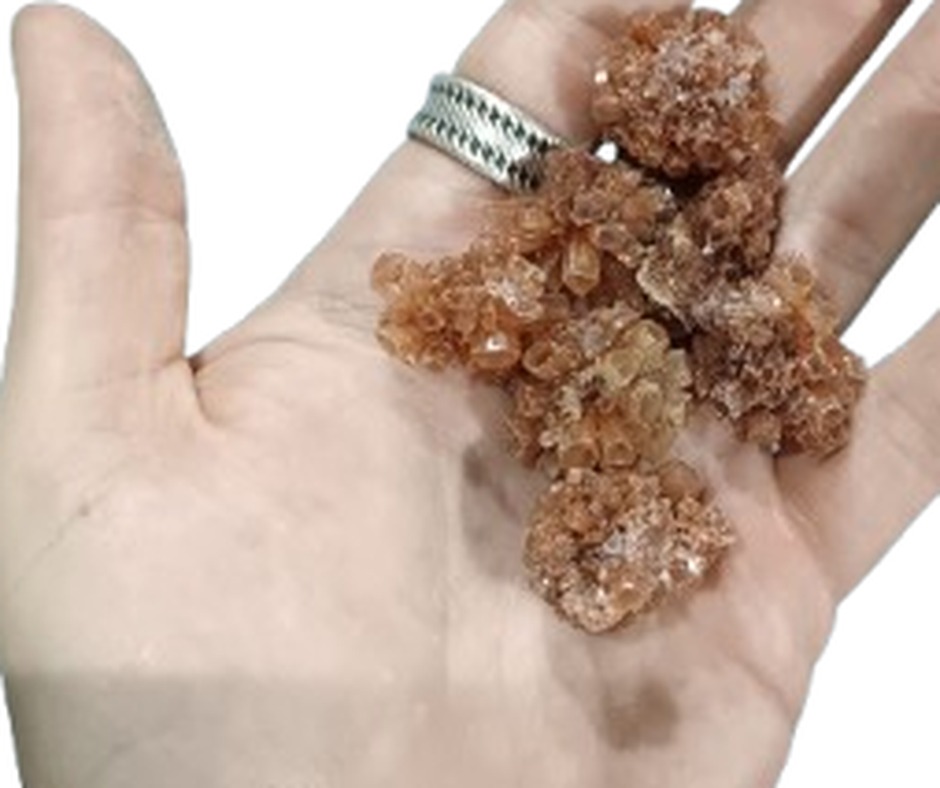
Brown to orange clusters of six-sided crystals that point out like little stars, the same mineral as pearls and coral. Traditionally kept for grounding, patience and calm.

Shop aragonite →All stones A–Z
Rough mini clusters online and in our Derby and Leicester shops
In depth

Everything about aragonite

What aragonite is and how it differs from calcite, the brown “sputnik” star clusters, its link with pearls and coral, what it has traditionally been used for, and how to look after it. Written by the team at our crystal shops in Derby and Leicester.

MineralCalcium carbonate
ColourBrown, orange, white, also blue and green
Hardness3.5 to 4 out of 10, soft
Found inSpain, Morocco, Austria and worldwide
Same chemistry asCalcite, pearl and coral
ChakraRoot
ZodiacCapricorn
WaterQuick rinse only, then dry

What aragonite is

Aragonite is calcium carbonate, the same chemistry as calcite, with its atoms packed in a different way. Minerals like this are called polymorphs. Aragonite is a little harder and heavier than calcite, and over very long spans of time it slowly turns into calcite.

It is named after Aragon in Spain, where it was first described, near the town of Molina de Aragón.

Sputnik and star clusters

The aragonite most people know is the brown to orange cluster of six-sided crystals pointing out in all directions, a bit like a spiky star or an old Sputnik satellite. Each “six-sided” crystal is really three crystals grown together, a habit called twinning. Most of these clusters on the market today come from Morocco.

Every cluster is different, and even a small one makes a lovely piece to hold or to sit on a shelf.

Pearls, coral and iron flowers

Aragonite is everywhere in the sea. The shiny nacre of pearls and the inside of many shells is made of tiny aragonite plates, and many corals build their skeletons from it.

On land it can grow in white, branching shapes called flos ferri, “iron flower”, named after the iron mines of Styria in Austria where they were found. Blue and green aragonite also exist, and are kept mostly as tumbled and polished pieces.

What aragonite is traditionally used for

In crystal tradition, brown aragonite is a warm, earthy, grounding stone. It is linked with the root chakra, with patience and with feeling settled.

  • Grounding: held when life feels rushed or scattered.
  • Calm: for a steady, quiet mood; see calm and sleep.
  • Patience: kept close through slow changes.
  • Protection: placed by the door in some traditions; see our protection page.

Aragonite and star signs

Aragonite is traditionally linked with Capricorn, the steady earth sign. It pairs well with smoky quartz and hematite for grounding, and with calcite, its mineral twin.

Looking after aragonite

  • Water: a quick rinse is fine, then dry it well. Don’t soak it, and keep it away from salt water.
  • Acids: vinegar, lemon juice and many cleaning sprays dissolve it.
  • Knocks: it is soft and the points chip easily, so store clusters on their own.
  • Dust: a soft, dry paintbrush gets between the crystals.
  • Cleansing: moonlight, a selenite plate or sound. See how to cleanse crystals.

More questions

What is the difference between aragonite and calcite?

They are both calcium carbonate with the atoms arranged differently. Aragonite is slightly harder and heavier, and slowly turns into calcite over time.

What are sputnik aragonite clusters?

Brown or orange clusters of six-sided aragonite crystals pointing in all directions. Most come from Morocco.

Can aragonite go in water?

A quick rinse is fine. Dry it straight away and never soak it or use salt water.

Are pearls made of aragonite?

Yes. The shiny nacre of pearls and many shells is built from tiny plates of aragonite.

What star sign is aragonite for?

It is traditionally linked with Capricorn.

What is aragonite good for?

Traditionally grounding, patience and a calm, settled feeling. Crystal meanings describe tradition and belief, not medical advice.

Crystal meanings describe tradition and belief, not medical advice.

More guides: Birthstones by month · Real or fake crystals? · How to cleanse crystals · All stones A–Z

In depth

Everything about aragonite

What aragonite is and how it differs from calcite, the brown “sputnik” star clusters, its link with pearls and coral, what it has traditionally been used for, and how to look after it. Written by the team at our crystal shops in Derby and Leicester.

MineralCalcium carbonate
ColourBrown, orange, white, also blue and green
Hardness3.5 to 4 out of 10, soft
Found inSpain, Morocco, Austria and worldwide
Same chemistry asCalcite, pearl and coral
ChakraRoot
ZodiacCapricorn
WaterQuick rinse only, then dry

What aragonite is

Aragonite is calcium carbonate, the same chemistry as calcite, with its atoms packed in a different way. Minerals like this are called polymorphs. Aragonite is a little harder and heavier than calcite, and over very long spans of time it slowly turns into calcite.

It is named after Aragon in Spain, where it was first described, near the town of Molina de Aragón.

Sputnik and star clusters

The aragonite most people know is the brown to orange cluster of six-sided crystals pointing out in all directions, a bit like a spiky star or an old Sputnik satellite. Each “six-sided” crystal is really three crystals grown together, a habit called twinning. Most of these clusters on the market today come from Morocco.

Every cluster is different, and even a small one makes a lovely piece to hold or to sit on a shelf.

Pearls, coral and iron flowers

Aragonite is everywhere in the sea. The shiny nacre of pearls and the inside of many shells is made of tiny aragonite plates, and many corals build their skeletons from it.

On land it can grow in white, branching shapes called flos ferri, “iron flower”, named after the iron mines of Styria in Austria where they were found. Blue and green aragonite also exist, and are kept mostly as tumbled and polished pieces.

What aragonite is traditionally used for

In crystal tradition, brown aragonite is a warm, earthy, grounding stone. It is linked with the root chakra, with patience and with feeling settled.

  • Grounding: held when life feels rushed or scattered.
  • Calm: for a steady, quiet mood; see calm and sleep.
  • Patience: kept close through slow changes.
  • Protection: placed by the door in some traditions; see our protection page.

Aragonite and star signs

Aragonite is traditionally linked with Capricorn, the steady earth sign. It pairs well with smoky quartz and hematite for grounding, and with calcite, its mineral twin.

Looking after aragonite

  • Water: a quick rinse is fine, then dry it well. Don’t soak it, and keep it away from salt water.
  • Acids: vinegar, lemon juice and many cleaning sprays dissolve it.
  • Knocks: it is soft and the points chip easily, so store clusters on their own.
  • Dust: a soft, dry paintbrush gets between the crystals.
  • Cleansing: moonlight, a selenite plate or sound. See how to cleanse crystals.

More questions

What is the difference between aragonite and calcite?

They are both calcium carbonate with the atoms arranged differently. Aragonite is slightly harder and heavier, and slowly turns into calcite over time.

What are sputnik aragonite clusters?

Brown or orange clusters of six-sided aragonite crystals pointing in all directions. Most come from Morocco.

Can aragonite go in water?

A quick rinse is fine. Dry it straight away and never soak it or use salt water.

Are pearls made of aragonite?

Yes. The shiny nacre of pearls and many shells is built from tiny plates of aragonite.

What star sign is aragonite for?

It is traditionally linked with Capricorn.

What is aragonite good for?

Traditionally grounding, patience and a calm, settled feeling. Crystal meanings describe tradition and belief, not medical advice.

Crystal meanings describe tradition and belief, not medical advice.

More guides: Birthstones by month · Real or fake crystals? · How to cleanse crystals · All stones A–Z

Shop aragonite

See all 18 →